Selecting the Right Sealant
Key Considerations for a Durable Building Envelope
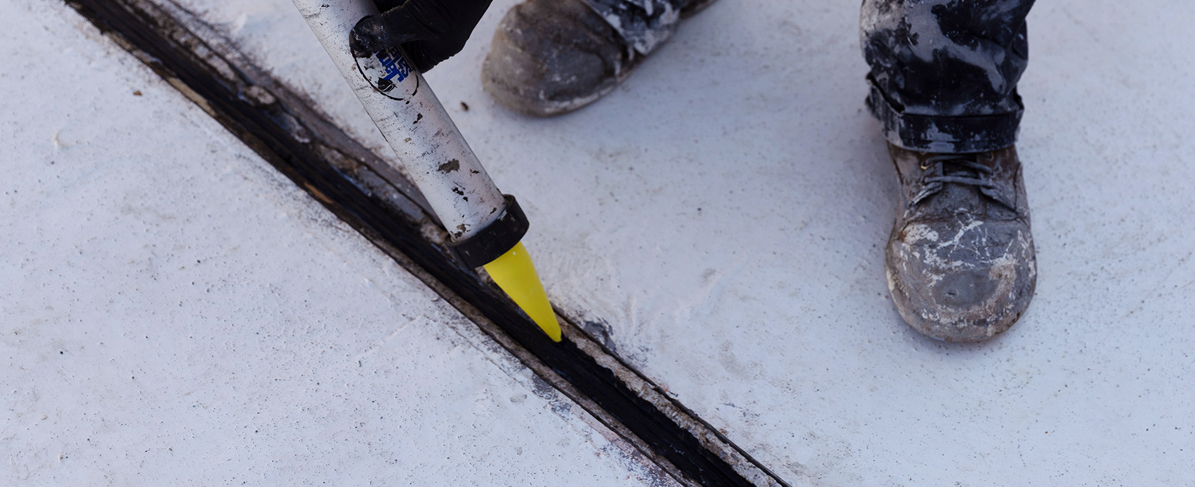
Key Considerations for a Durable Building Envelope
Assess how much water contact the joint will endure. If a joint is subject to constant moisture or full water immersion (e.g. water tank joints, submerged structures), robust waterproof sealants – often polyurethane-based – are typically recommended for their proven resistance to prolonged liquid contact. Joints in contact with chemicals or submerged conditions may require specialised testing or closed-cell foam expansion joints for added durability. For typical building envelope joints exposed only to rainfall or cleaning cycles, high-quality hybrid or silicone sealants can perform well, but verifying their performance through project-specific testing or mock-ups is prudent for critical waterproofing applications.
Consider the level of sun and weather exposure. In sunny regions such as much of South Africa, UV resistance is a crucial attribute. Silicone and hybrid sealants usually offer excellent resilience against intense UV radiation, resisting yellowing and brittleness better than many other chemistries. Aliphatic polyurethanes (a type of polyurethane less prone to UV degradation) are more UV-stable than standard aromatic polyurethanes, but they will still show age earlier than silicones under relentless sun. Using sealants with proven UV durability or applying protective coatings can extend joint life, especially on north-facing roofs, or other high-UV surfaces.
Determine if the sealant will need to be painted or coated after curing. If a joint must blend seamlessly with painted surfaces or receive a protective topcoat, you’ll need a paintable sealant. Polyurethane and acrylic-latex sealants generally can be painted once fully cured. Some modern hybrid sealants are also formulated to accept paint. 100% silicone sealants, however, cannot be painted, so colour selection must be made from manufacturer options beforehand. Always allow full curing of sealant before painting and perform adhesion tests of the paint to the sealant to ensure compatibility. In projects requiring coatings or over-cladding of joints, this factor can influence sealant choice significantly.
Account for the temperature range the joint will experience and the temperature at installation. Extreme heat or cold can influence both sealant choice and its handling during application. For external joints facing high operating temperatures (e.g., around metal roofing in a hot climate), silicone and certain hybrid or polyurethane sealants maintain performance up to high temperature thresholds. Cold climates or winter installations, on the other hand, demand sealants that remain workable and cure properly in low temperatures – specialised formulations of silicone, polyurethane, or butyl-based sealants can meet these needs. Check the product data for recommended application temperature range. In practice, extreme ambient conditions (from Highveld midday heat to chilly Drakensberg nights) might warrant adjusted application techniques or conditioning of sealants and expansion foams to ensure proper joint filling and adhesion.
Consider sound transmission requirements for joints in noise-sensitive projects. While sealants primarily stop air and water, a side benefit is reducing sound leakage through building joints. If acoustic performance is important (for instance, in concert halls, hospitals or mixed-use developments in busy cities), look for sealants or joint systems with tested Sound Transmission Class (STC) ratings. Foam expansion joints, due to their greater depth, can offer enhanced acoustic dampening compared to thin beads of standard sealant. Ultimately, good acoustic sealing depends on careful installation – ensuring continuous sealant coverage and eliminating gaps which sound can pass through. Evaluate tested systems or consult with manufacturers if acoustics are a priority.
Match sealant elasticity to the expected joint movement. Different joints expand, contract, or shift by varying amounts due to building movement and thermal expansion. A high-movement joint (for example, between precast panels or at a seismic joint) requires a high-performance sealant that can stretch and compress significantly without tearing or debonding. Key metrics are the sealant’s movement accommodation factor (often expressed as ±percentage) and its modulus (stiffness). Low-modulus sealants are more flexible and impart less stress on the substrate – suitable for delicate components like metal panels or EIFS. Stiffer, high-modulus products may suit applications like structural glazing where limited movement is expected but strength is needed. For wide or high-movement joints, silicone, polyurethane, or advanced hybrid sealants are typically preferred over acrylics or butyls, which have lower elongation.
In some cases, using a pre-compressed foam joint in tandem with a surface sealant can handle large movements while maintaining a weathertight seal. Always ensure proper joint design (correct width-to-depth ratio, use of bond breaker or backer rod) to maximise the movement performance of the chosen sealant.
Ensure the sealant bonds well to the specific materials in your project. A long-lasting joint depends on strong and durable adhesion of the sealant to the surrounding substrates (e.g., concrete, aluminium, glass, brick). Not all sealant chemistries adhere equally to every surface. For example, polyurethanes and acrylics typically adhere well to porous materials like concrete and can also accept coatings or membranes on top, making them good for joints that will be over-coated or where they must adhere to a waterproofing layer. Silicones excel at bonding to glass and metal, but note that once cured, new silicone will generally only stick to silicone or very few other materials – meaning if you use a silicone sealant, you usually need to use silicone again if you ever reseal that joint. It’s wise to perform adhesion tests on representative materials when selecting a sealant, especially if dealing with unusual substrates or if the sealant must adhere to existing coatings or membranes. Proper surface preparation (cleaning, priming if required, and dryness) is equally vital to achieving good adhesion in practice.
Verify that the sealant is chemically compatible with adjacent materials and other products in the assembly. Compatibility issues can lead to softening, staining, or failure at the interface of two materials even if each performs well alone. A general rule is that “like tends to be compatible with like” – for instance, silicone sealants are usually compatible with other silicone components and glass, polyurethanes with polyurethane coatings, etc. However, it’s not absolute; some combinations can react adversely. For example, certain plasticisers in one sealant might affect another, or a solvent in a primer might degrade a neighbouring material. If a sealant will be in contact with an existing sealant, waterproofing membrane, or cladding finish, consult compatibility charts or run tests to confirm they won’t interact negatively. Ensuring compatibility prevents discolouration, loss of adhesion, or material degradation over time.
Selecting the right sealant is a multi-faceted decision that directly affects a building’s resilience, energy efficiency, and watertightness. By carefully considering factors like water exposure, UV, temperature, acoustics, joint movement, adhesion, and compatibility, design and construction professionals can choose a sealant system that stands up to the project’s demands and South Africa’s environmental conditions. It’s always beneficial to review technical data, seek expert advice, or even build a small mock-up under expected conditions to verify performance. With an informed choice and skilled installation, you will reduce future maintenance needs and improve the long-term performance of the building envelope – an outcome both your client and your reputation will benefit from.
Tremco South Africa offers a range of advanced sealant technologies and technical support to help ensure your projects are sealed for success. For more guidance on joint sealing solutions or to discuss a specific project’s needs, reach out to our team.

Midrand Industrial Park,
8 Cresset Rd, Choolorkop,
Midrand, 1624,
South Africa


